ویندوز ۷تازهترین نسخه سیستم عاملاز سری مایکروسافت ویندوزاست که برای استفاده کامپیوترهای شخصیشامل انواع خانگی و اداری تولید شده است. این سیستم عامل هفتمین نسل از سیستم عاملهای ویندوز میباشد و به همین دلیل نام آن را ویندوز ۷گذاشتهاند و نسخه نهایی آن بطور رسمی در تاریخ ۲۲اکتبرسال ۲۰۰۹در بازار عرضه میشود.
مایکروسافت، ویندوز ۷ را در کنفرانس طراحان حرفهای و کنفرانس مهندسی سختافزار ویندوز نمایش خواهد داد و عرضهٔ نسخهٔ آزمایشی بتای این سیستم عامل برای نیمهٔ ماه دسامبر برنامهریزی شدهاست.
در حالیکه تنها جزئیات معدودی از ویژگیهای نسخه آینده سیستم عامل ویندوز فاش شدهاست میتوان مطمئن بود که Windows ۷در دو نگارش متفاوت ۳۲بیتی و ۶۴ بیتی ارائه شود. گفته میشود که این نسخه نیز مانند نسخههای پیشین خانواده ویندوز بطور برنامه ریزی شده و جدول زمانی قابل پیشگویی عرضه شود.
تنها امکانات ویندوز ۷ برای کاربر نهایی که تاکنون تبلیغ شده رابط کاربری چند لمسی آن است که از حرکات چند انگشت در ویندوز پشتیبانی میکند و تعامل کاربر تمامی برنامهها را در صورتی که بخواهد از آنها استفاده کند، بهبود میبخشد. به عنوان مثال کاربر میتواند یک پیانوی مجازی را با لمس کلیدهای مجازی برروی صفحه اجرا کند، به سادگی عکسها را برروی صفحه درگ کرده، عکسها را با دو انگشت چرخانده و بر روی آنها زوم کند؛ این ویژگیها در جریان کنفرانسی در ماه میتوسط مایکروسافت معرفی شدند. نمونهٔ چنین فناوری پیش از این در رایانههای مایکروسافت سرفیسدیده شده بود
قابل ذکر است که نسخه آتی سیستم عامل ویندوز پیش از این با اسم رمز پروژهای Vienna و Blackcomb معرفی شده بود که اخیرا مایکروسافت با تغییر آن به Windows ۷اظهار کردهاست که مشخصات بیشتر پیرامون نامگذاری نهایی این سیستم عامل همزمان با عرضه نسخه تجاری آن به شرکتها اعلام خواهد شد.
Screen shot of Windows 7 Windows 7 (formerly codenamed Blackcomb and Vienna) is the latest version of Microsoft Windows, a series of operating systems produced by Microsoft for use on personal computers, including home and business desktops, laptops, tablet PCs and media center PCs. Windows 7 was released to manufacturing on July 22, 2009, with general retail availability set for October 22, 2009, less than three years after the release of its predecessor, Windows Vista. Windows 7's server counterpart, Windows Server 2008 R2, is slated for release at about the same time. Unlike its predecessor, which introduced a large number of new features, Windows 7 is intended to be a more focused, incremental upgrade to the Windows line, with the goal of being fully compatible with applications and hardware with which Windows Vista is already compatible. Presentations given by the company in 2008 focused on multi-touch support, a redesigned Windows Shell with a new taskbar, a home networking system called Home Group and performance improvements. Some applications that have been included with prior releases of Microsoft Windows, including Windows Calendar, Windows Mail, Windows Movie Maker, and Windows Photo Gallery, will not be included in Windows 7; some will instead be offered separately as part of the free Windows Live Essentials suite.
The first independent version of Microsoft Windows, version 1.0, released on 20 November 1985, achieved little popularity. It was originally going to be called "Interface Manager" but Rowland Hanson, the head of marketing at Microsoft, convinced the company that the name would be more appealing to consumers. Windows 1.0 was not a complete operating system, but rather an "operating environment" that extended MS-DOS, and shared the latter's inherent flaws and problems. The first version of Microsoft Windows included a simple graphics painting program called Windows Paint, Windows Write, a simple word processor, an appointment "calendar", a "cardfiler", a "notepad", a "clock", a "control panel", a "computer terminal", "Clipboard", and RAM driver. It also included the MS-DOS Executive and a game called Reversi.
Microsoft had worked with Apple Computer to develop several Desk Accessories and other minor pieces of software that were included with early Macintosh system software. As part of the related business negotiations, Microsoft had licensed certain aspects of the Macintosh user interface from Apple; in later litigation, a district court summarized these aspects as "screen displays". In the development of Windows 1.0, Microsoft intentionally limited its borrowing of certain GUI elements from the Macintosh user interface, in order to comply with its license.
For example, windows were only displayed "tiled" on the screen; that is, they could not overlap or overlie one another. There was no trash can icon with which to delete files, since Apple claimed ownership of the rights to that paradigm.
Microsoft Windows version 2 came out on 9 December 1987, and proved slightly more popular than its predecessor. Much of the popularity for Windows 2.0 came by way of its inclusion as a "run-time version" with Microsoft's new graphical applications, Excel and Word for Windows. They could be run from MS-DOS, executing Windows for the duration of their activity, and closing down Windows upon exit.
Microsoft Windows received a major boost around this time when Aldus PageMaker appeared in a Windows version, having previously run only on Macintosh. Some computer historians date this, the first appearance of a significant and non-Microsoft application for Windows, as the beginning of the success of Windows.
Versions 2.0x used the real-mode memory model, which confined it to a maximum of 1 megabyte of memory. In such a configuration, it could run under another multitasker like DESQview, which used the 286 Protected Mode.
Later, two new versions were released: Windows/286 2.1 and Windows/386 2.1. Like previous versions of Windows, Windows/286 2.1 used the real-mode memory model, but was the first version to support the "High Memory Area|HMA". Windows/386 2.1 had a protected mode kernel with LIM-standard EMS emulation, the predecessor to XMS which would finally change the topology of IBM PC computing. All Windows and DOS-based applications at the time were real mode, running over the protected mode kernel by using the virtual 8086 mode, which was new with the 80386 processor.
Version 2.03, and later 3.0, faced challenges from Apple over its overlapping windows and other features Apple charged mimicked the ostensibly copyrighted "look and feel" of its operating system and "embodie[d] and generated a copy of the Macintosh" in its OS. Judge William Schwarzer dropped all but 10 of Apple's 189 claims of copyright infringement, and ruled that most of the remaining 10 were over uncopyrightable ideas.
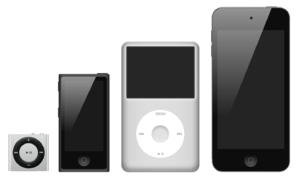
iPod is a brand of portable media players designed and marketed by Apple Inc. and launched on October 23, 2001. The product line-up includes the hard drive-based iPod Classic, the touchscreen iPod Touch, the video-capable iPod Nano, and the compact iPod Shuffle. The iPhone can function as an iPod but is generally treated as a separate product. Former iPod models include the iPod Mini and the spin-off iPod Photo (since reintegrated into the main iPod Classic line). iPod Classic models store media on an internal hard drive, while all other models use flash memory to enable their smaller size (the discontinued Mini used a Microdrive miniature hard drive). As with many other digital music players, iPods can also serve as external data storage devices. Storage capacity varies by model. Apple's iTunes software can be used to transfer music to the devices from computers using certain versions of Apple Macintosh and Microsoft Windows operating systems.For users who choose not to use Apple's software or whose computers cannot run iTunes software, several open source alternatives to iTunes are also available.ITunes and its alternatives may also transfer photos, videos, games, contact information, e-mail settings, Web bookmarks, and calendars to iPod models supporting those features. As of September 2008, more than 173,000,000 iPods had been sold worldwide, making it the best-selling digital audio player series in history. From Wikipedia
EXE is the common filename extension denoting an executable file (a program) in the DOS, Open VMS, Microsoft Windows, Symbian, and OS/2 operating systems. Besides the executable program itself, many EXE files contain other components called resources, such as bitmaps and icons which the executable program may use for its graphical user interface.
Carbon dioxide and other gases warm the surface of the planet naturally by trapping solar heat in the atmosphere. This is a good thing because it keeps our planet habitable. However, by burning fossil fuels such as coal, gas and oil and clearing forests we have dramatically increased the amount of carbon dioxide in the Earth’s atmosphere and temperatures are rising.
The vast majority of scientists agree that global warming is real, it’s already happening and that it is the result of our activities and not a natural occurrence.1 The evidence is overwhelming and undeniable.
We’re already seeing changes. Glaciers are melting, plants and animals are being forced from their habitat, and the number of severe storms and droughts is increasing.
The number of Category 4 and 5 hurricanes has almost doubled in the last 30 years.2
Malaria has spread to higher altitudes in places like the Colombian Andes, 7,000 feet above sea level.3
The flow of ice from glaciers in Greenland has more than doubled over the past decade.4
At least 279 species of plants and animals are already responding to global warming, moving closer to the poles.5
If the warming continues, we can expect catastrophic consequences.
Deaths from global warming will double in just 25 years -- to 300,000 people a year.6
Global sea levels could rise by more than 20 feet with the loss of shelf ice in Greenland and Antarctica, devastating coastal areas worldwide.7
Heat waves will be more frequent and more intense.
Droughts and wildfires will occur more often.
The Arctic Ocean could be ice free in summer by 2050.8
More than a million species worldwide could be driven to extinction by 2050.9
There is no doubt we can solve this problem. In fact, we have a moral obligation to do so. Small changes to your daily routine can add up to big differences in helping to stop global warming. The time to come together to solve this problem is now .